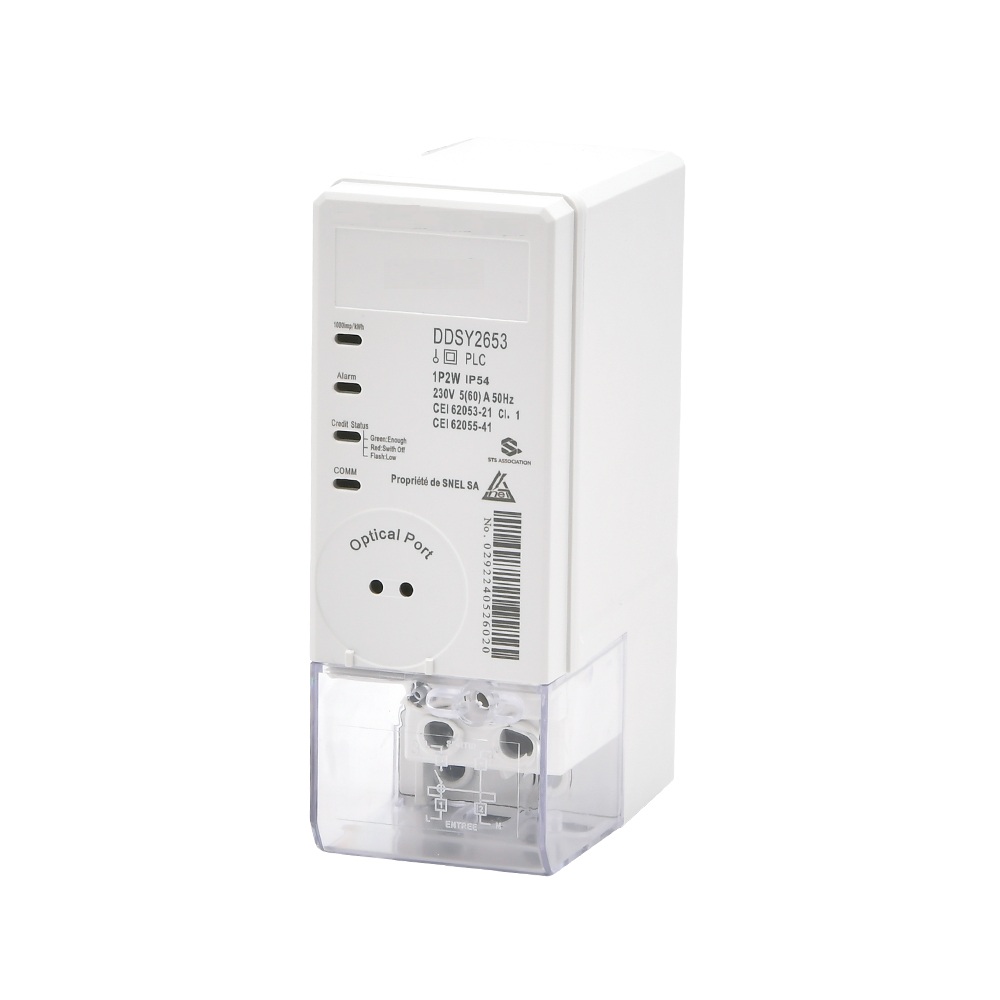
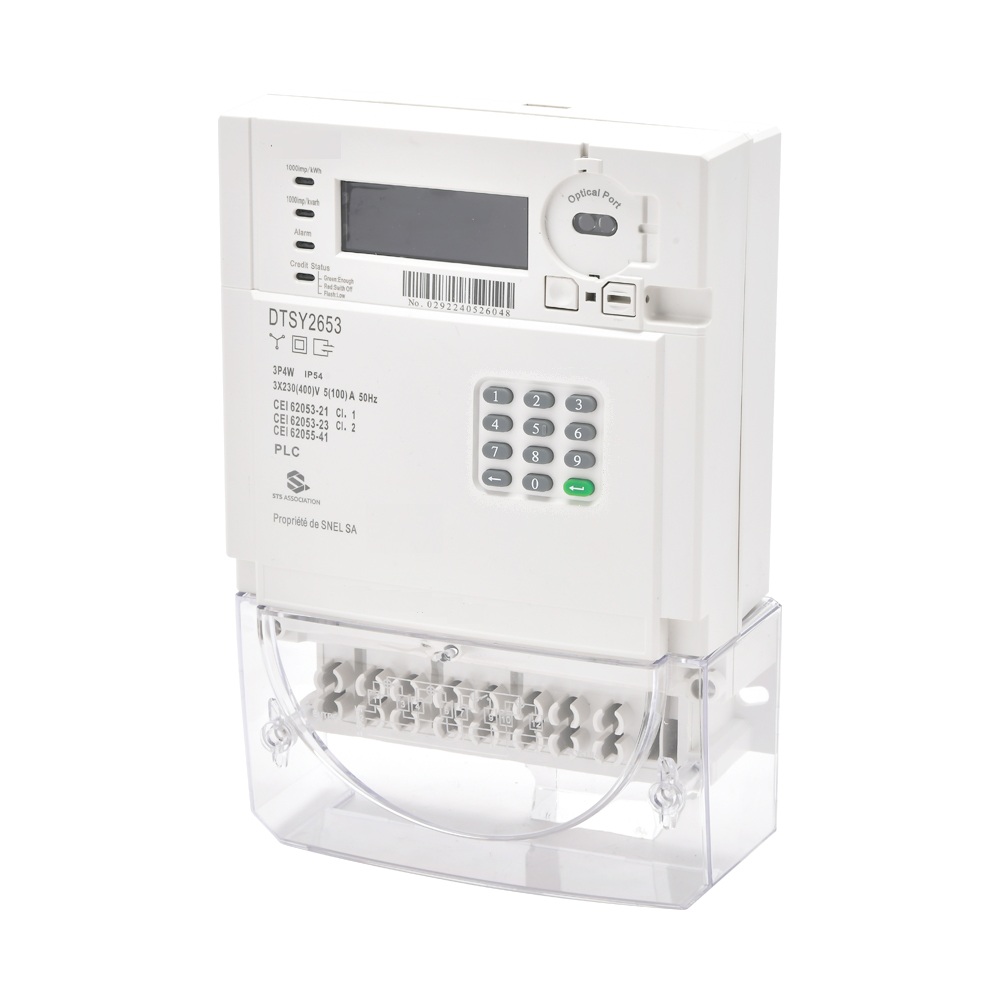
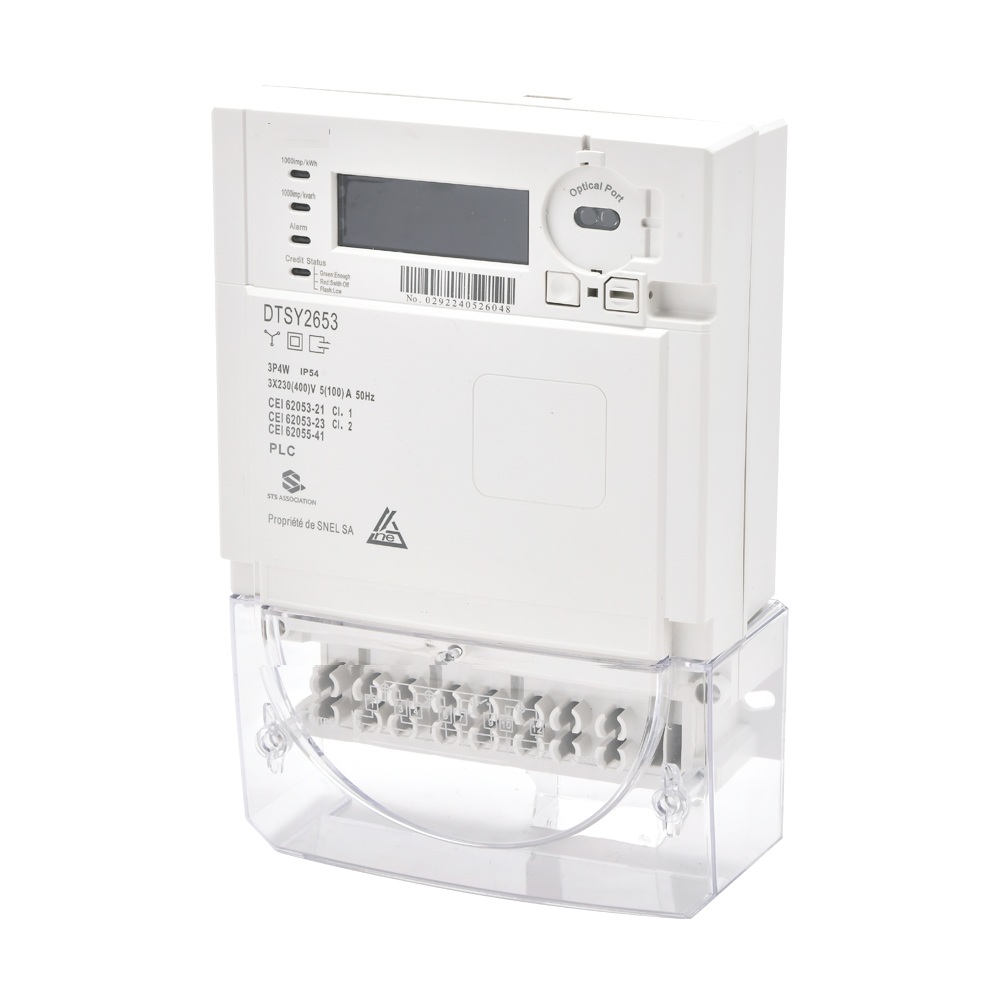
What is a wireless electricity meter?
Publish Time: Author: Site Editor Visit: 782
From the essence of technology to practical application, the core value of wireless electricity meters is reflected in the dual breakthrough of "wireless communication+intelligent management". The following provides a detailed explanation from the dimensions of definition analysis, technical architecture, core functions, and applicable scenarios:
1、 Core definition: The essence of "wireless" is the innovation of communication methods
It should be clarified that the "wireless" of wireless electricity meters specifically refers to the wireless transmission of data channels, rather than the disconnection of the measurement itself from the power line - it still needs to be connected to the grid to complete energy measurement, but replaces traditional RS485 wired communication with wireless transmission technology, achieving a deployment mode of "installation and networking, power on and online". This innovation completely solves the three major pain points of traditional wired meter reading:
-High wiring cost: In scenes such as old residential areas and historical buildings, there is no need to break walls and thread wires, reducing construction costs by more than 50%;
-Difficulty in maintenance: Avoiding faults such as moisture, oxidation, and lightning strikes on the line, reducing on-site maintenance workload by more than 90%;
-Poor scalability: Adding new meters does not require rewiring and can be directly integrated into the management system by connecting to the wireless network.
2、 Technical architecture: a complete solution of "terminal+network+platform"
wireless electricity meters are not a single device, but an integrated system consisting of metering terminals, wireless communication modules, and cloud management platforms . Its core lies in the differentiated selection of communication technologies:
1. Mainstream wireless communication technology and characteristics
Different technological routes correspond to different scenario requirements, and currently there are four main types of technologies in the market:
|Communication Technology | Core Advantages | Applicable Scenarios | Typical Features|
|----------------|-----------------------------------|-------------------------------------------|-------------------------------------------|
|NB IoT (Narrowband Internet of Things) | Low power consumption (battery life of 6-10 years), wide coverage, strong penetration | Old residential areas, underground meter wells, rural dispersed users | No gateway required, relying on operator signals, requiring a small amount of data fees|
| 4G/Cat.1 | High bandwidth, low latency, strong real-time performance | Business owners' meter, energy storage power station, charging pile group | Requires mains power supply, supports minute level high-frequency data acquisition|
|LoRa (Long Range Wireless) | Ad hoc network, strong anti-interference, large coverage radius (3-5 kilometers) | Industrial parks, agricultural irrigation, remote area monitoring | Requires self built gateway, suitable for centralized management of large-scale equipment|
|WiFi/Bluetooth | Low cost, easy to connect to home networks | Home balcony photovoltaics, household storage systems, small commercial spaces | Dependent on local network coverage, short transmission distance|
Taking the Ankerui ADW300 series electric meter as an example, it integrates multiple protocol modules such as 4G, NB IoT, LoRa, etc., which can flexibly switch communication methods according to the scenario, and even support breakpoint resume function. The data cache can last up to 2 weeks to ensure transmission integrity.
2. Hardware and Platform Collaborative Logic
Each wireless electricity meter is equipped with an independent measuring chip and communication module, with a measuring accuracy of 0.5 or even higher. It can collect more than 20 electrical parameters such as voltage, current, power, harmonics, etc. in real time. After the data is uploaded to the cloud platform through wireless signals, it can automatically generate reports, trigger alarms, and support seamless integration with property management systems, financial systems, home energy management systems (EMS), and other systems.
3、 Core Function: Comprehensive Upgrade from "Measurement" to "Management"
wireless electricity meters have completely surpassed the "counting" function of traditional meters and become the intelligent hub of energy management. Their core capabilities include:
1. Automated meter reading and data visualization
-Regularly and automatically report electricity consumption data (accurate to the minute level), with a meter reading success rate of over 99.5%, eliminating the problem of missed or estimated readings caused by manual meter reading;
2. Abnormal alarm and security protection
-Built in multiple alarm mechanisms such as overvoltage, undercurrent, leakage, and long water flow at night (for single use of water meters), and notifications of abnormal situations are immediately sent through SMS and APP push notifications;
-Some models support residual current monitoring and temperature detection, which can provide early warning of electrical fire risks, especially suitable for old residential areas and industrial and commercial places.
3. Remote control and energy efficiency optimization
-Support prepaid mode: When the balance is insufficient, the valve/power will be automatically turned off. After payment, it will be remotely restored without the need for manual on-site operation;
-In the industrial and commercial scenario, peak valley electricity price management and demand control can be implemented through the platform to help enterprises reduce electricity costs; In the household scenario, it is possible to link photovoltaic and energy storage devices to optimize power generation utilization and achieve "peak valley arbitrage".
4、 Applicable scenarios: Flexible deployment solutions covering all domains
The wireless electricity meter's wiring free feature makes it significantly advantageous in scenarios where traditional wired meters are difficult to utilize. Typical applications include:
1. Renovation of old facilities : No need to damage the wall decoration, the entire building's meter reading system can be upgraded within 24 hours, such as the urban village rental project and the renovation of water and electricity in old residential areas;
2. Decentralized scenario : Rural irrigation pump stations, urban street lights, charging pile groups, and other dispersed locations can achieve centralized monitoring without the need for separate wiring;
3. New Energy System : In home balcony photovoltaic and household storage systems, full chain monitoring of photovoltaic power generation, battery charging and discharging, and grid interaction data is achieved through WiFi connection. For example;
4. Temporary electricity usage scenario : Short term electricity demand for construction sites, pop-up stores, etc. The equipment can be flexibly disassembled and reused to avoid wiring waste.
5、 Key differences from wired electricity meters
When choosing, it is necessary to weigh the advantages and disadvantages of both based on the scenario:
|Dimension | wireless electricity meter | Traditional Wired Meter (such as RS485)|
|--------------|-----------------------------------|-----------------------------------------|
|Deployment cost | Initial equipment cost is high, but construction cost is low | Equipment is cheap, but wiring and construction costs are high|
|Flexibility | Unrestricted by wiring, can flexibly add or remove devices | Constrained by wiring, expansion requires rewiring|
|Data transmission | Dependent on wireless signals, may be affected by interference | Stable transmission, strong anti-interference ability|
|Maintenance difficulty | Support remote operation and maintenance, less on-site maintenance | Regular inspection of the circuit is required, and troubleshooting is complex|
For example, in the renovation of old residential areas, wireless electricity meters can save 70% of construction time; In scenarios such as data centers that require high stability, wired meters still have an advantage.
6、 Industry Trends and Precautions
With the promotion of the "dual carbon" policy and the maturity of IoT technology, wireless electricity meters are accelerating the replacement of traditional meters, especially in emerging fields such as household storage and distributed photovoltaics where demand is exploding. Attention should be paid when choosing:
-Communication signal coverage: LoRa or 4G models are preferred for remote areas, and WiFi versions can be used for home scenarios;
-Power consumption and supply: NB IoT models are preferred for battery power supply, and 4G versions can be considered for mains power supply;
-Data Security: Choose a brand with encrypted transmission and permission management to avoid the risk of data leakage.
Essentially, wireless electricity meters are the "nerve endings" of smart grids and digital lifestyles. They break through the limitations of space and wiring through wireless technology, making energy management more efficient, accurate, and closer to user needs. If you want to know the specific selection plan for a certain scenario (such as home photovoltaics, industrial and commercial parks), or need to compare the technical parameters of different brands, please feel free to provide additional explanations at any time!